Choosing Tablecloths well means considering dimensions, everyday use and care as well as pattern. A tablecloth can protect the surface while setting the colour and pattern direction of the dining area.
Start with the room and the way it is used
Everyday meals, family use and special occasions create different drop and care requirements. Before choosing, note the amount of daylight, the colours already in the room and how often the textile will be handled.
Check dimensions before colour
Measure the table width and length or diameter, then add the desired drop on both sides. Compare those measurements with the information on the product page instead of estimating from a photograph.
Create a controlled colour connection
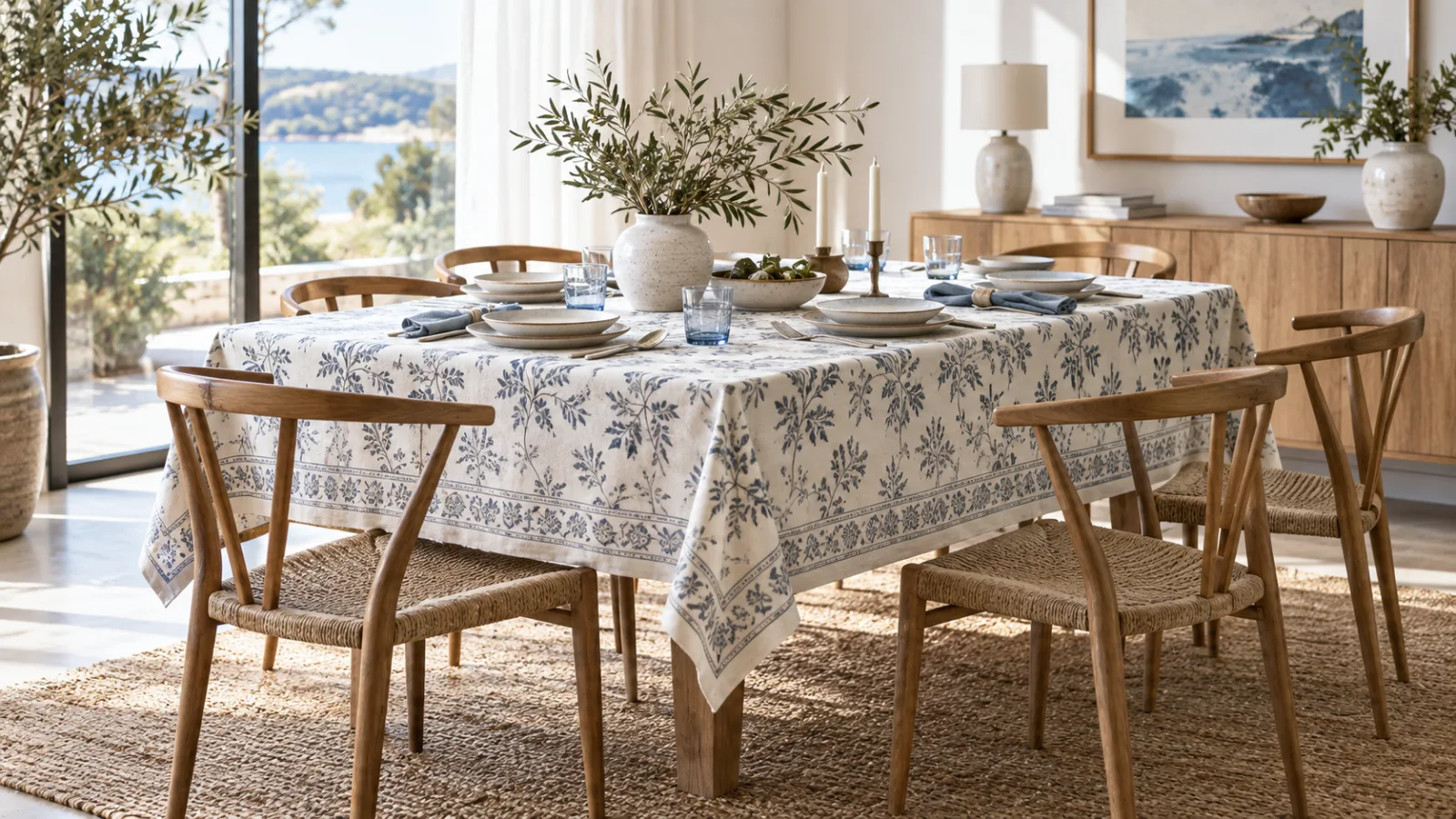
Keep tableware quiet with a printed cloth, or use livelier accents over a plain cloth. Repeating one existing colour is usually calmer than introducing several new colours at once.
Balance pattern and texture
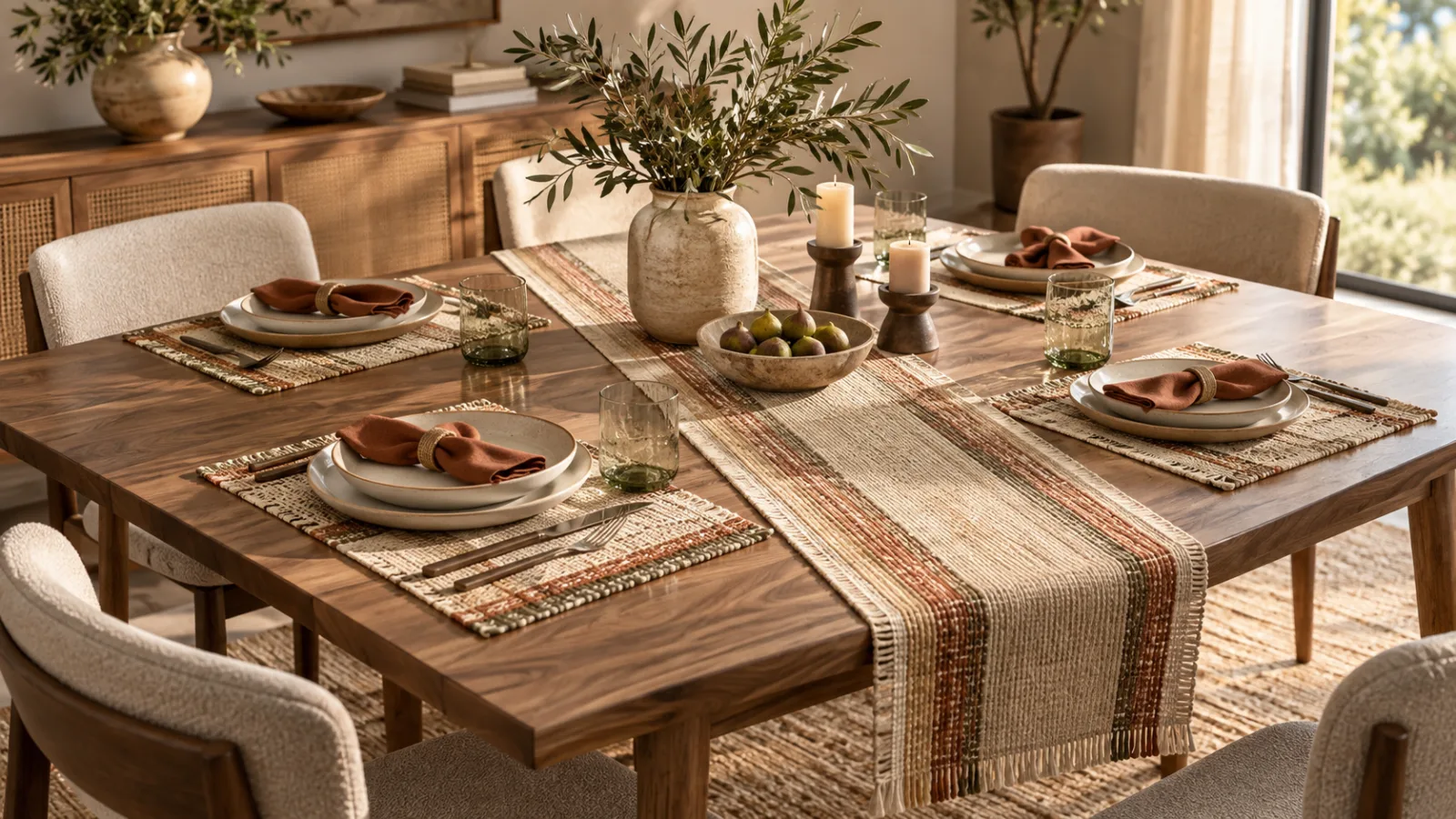
A strong print becomes easier to use when the surrounding large surfaces stay quiet. Pair Tablecloths with table runners and placemats through one shared colour or a compatible texture rather than an exact match.
Make care part of the decision
Treat marks early, do not place hot cookware directly on the textile and avoid high heat on printed surfaces. The care label and the individual product description always take priority over general advice.
A practical five-point check
- Measure the area or existing textile.
- Choose one main colour and one supporting colour.
- Decide whether pattern or texture will be the focal point.
- Check material and care information.
- Review the item in the Tablecloths collection.
A few options from the current collection
- Vintage Flower Round Easy-Care Suede-Feel Tablecloth - MSY-05
- Vintage Flower Rectangular Easy-Care Suede-Feel Tablecloth - MS-05
- White Flora Series Round Easy-Care Suede-Feel Tablecloth - MSY-02-2
Availability can change; use each product page for current dimensions, material notes and care instructions.
A considered choice should work with the room today and remain easy to combine later. Begin with function, confirm the dimensions and then use colour to complete the look.