A table runner adds colour, motif and texture without hiding the entire tabletop. It works for a simple breakfast or an occasion setting; the key is to balance runner dimensions, place settings and the surrounding textiles.
How should a runner be positioned?
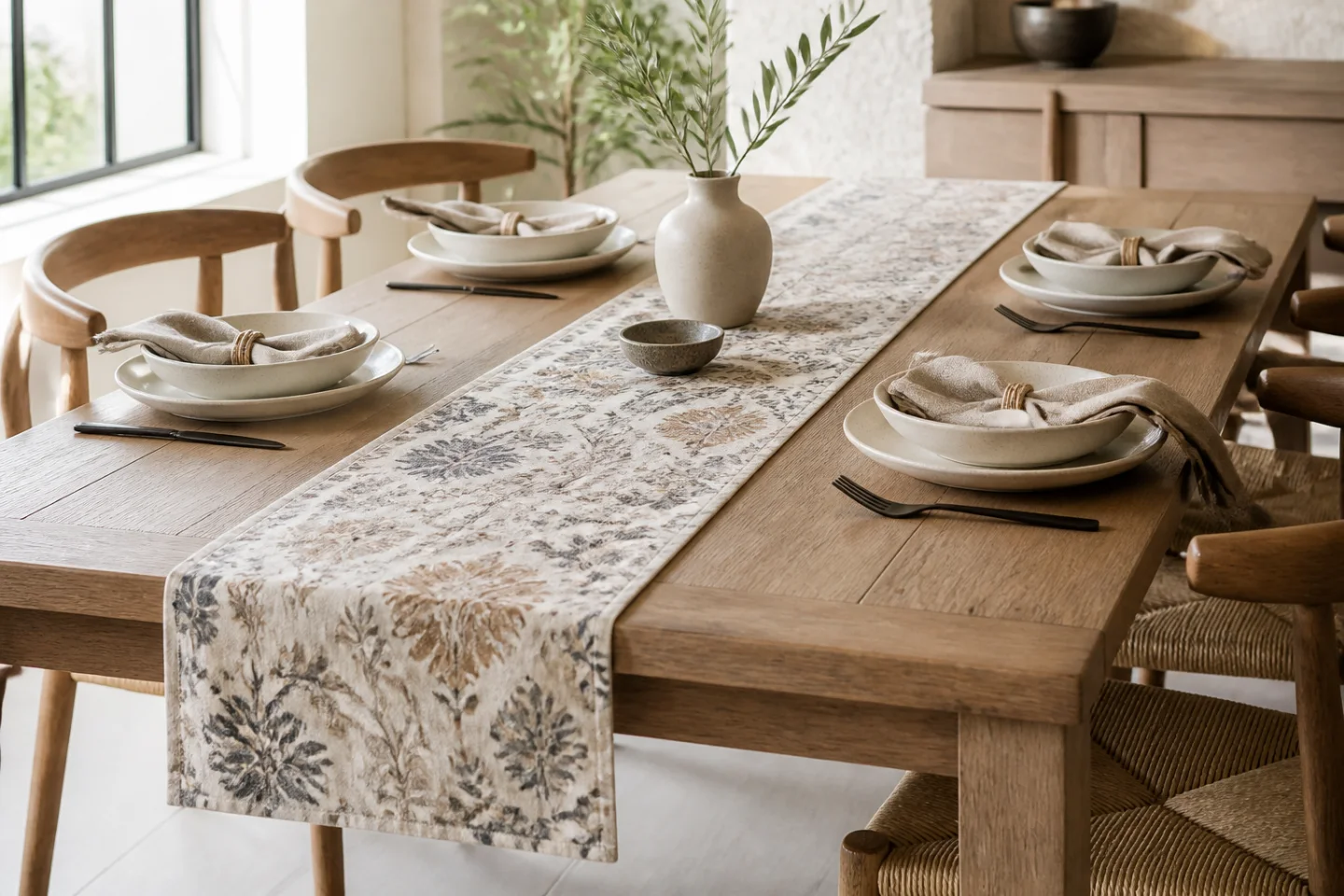
The classic approach is to centre it along the long axis with equal table surface visible on both sides. It may overhang evenly for a traditional finish or end on the tabletop for a cleaner contemporary look.
1. Use it alone on natural wood
Let the grain remain visible and add simple ceramics, quiet napkins and a low vase for an easy everyday table.
2. Layer it over a plain tablecloth
A printed runner creates a focal line over a cream, white or neutral tablecloth. Similar fabric weights help the layers sit naturally.
3. Place two runners across a long table
Two crosswise runners can define opposite two-person settings. Protect textile surfaces from hot cookware with suitable trivets.
4. Connect placemats through colour
The runner and placemats do not need an identical pattern. One shared colour is enough; keep placemats quiet when the runner motif is active.
5. Scale the centrepiece to the runner
A low vase, a few branches or a small candle group creates focus without blocking conversation. Leave clear space for shared dishes.
6. Add seasonal detail sparingly
Use fresh greens and pale tones in spring, earth and clay in autumn, or controlled red and metallic accents for winter celebrations. Small removable details keep the runner versatile.
7. Keep everyday settings simple
A runner, plates and napkins may be all that is needed. Fewer accessories make cleaning easier and allow the print to remain visible. Compare options in the table runner and placemat collection.
Care essentials
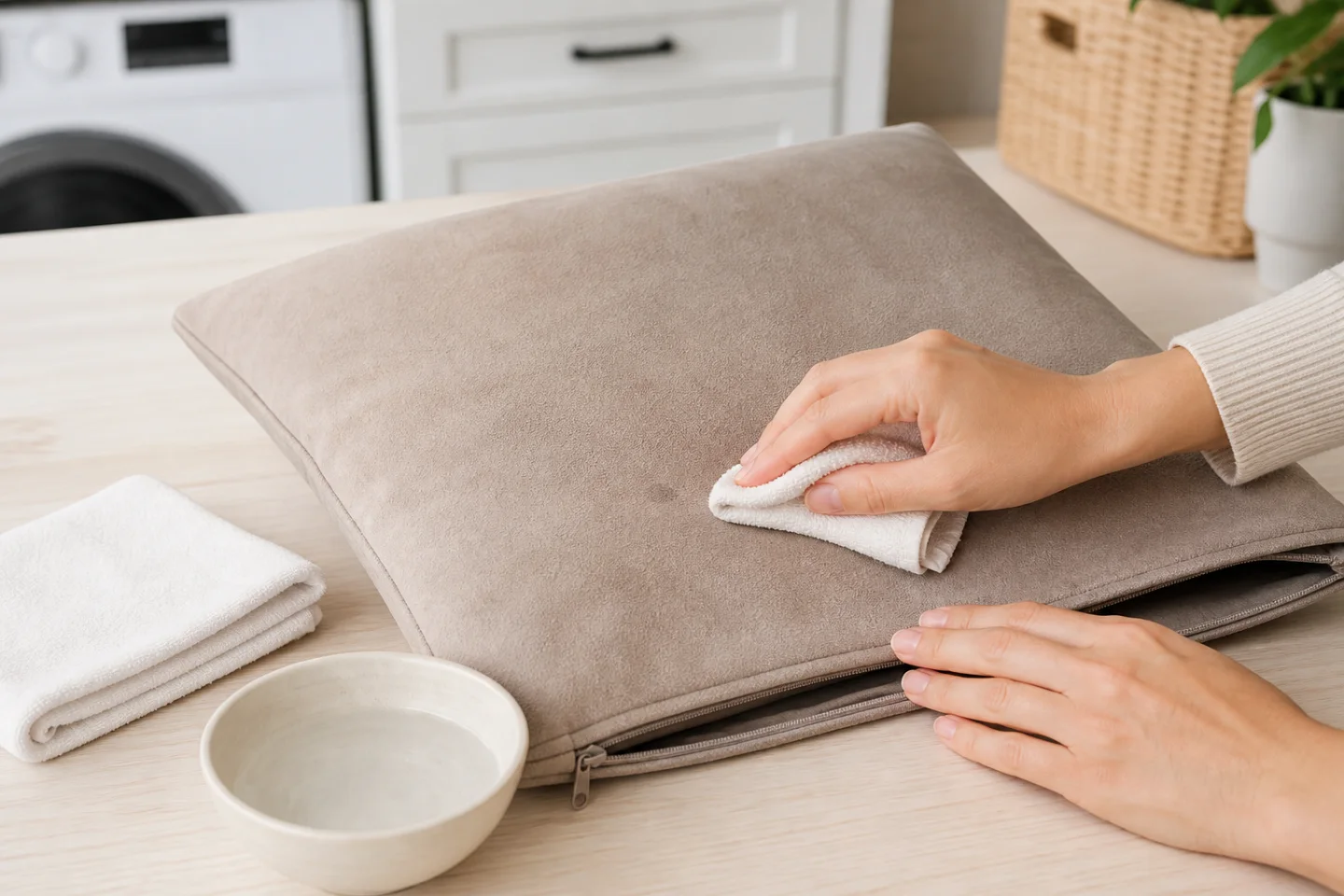
Blot rather than rub a fresh stain, never place hot cookware directly on the textile and follow the stated wash temperature. Dry flat and do not fold until fully dry.